
Table of Contents
- What the Numbers Actually Show
- Understanding the 2026 Regulatory Environment
- The Insurance Reality on the Gulf Coast
- Pensacola Beach Vacation Rentals and the Hybrid Ownership Model
- What Drives Strong Performance in This Market
- How 2026 Market Conditions Affect the Investment Case
- Risks Worth Taking Seriously
- Putting It All Together: Is This the Right Investment for You?
Pensacola Beach draws millions of visitors each year to its sugar-white sand and emerald Gulf water. For real estate investors, that foot traffic raises an obvious question: can a vacation rental property here actually pencil out in 2026? The short answer is yes, with the right property, realistic expectations, and a clear-eyed look at the costs involved. This article walks through the market data, the regulatory environment, and the practical strategies that separate profitable owners from frustrated ones.
What the Numbers Actually Show
Before committing capital, investors need a baseline. The most useful public benchmarks come from short-term rental data platforms that track performance across active listings.
According to Airbtics data from March 2024, Pensacola short-term rentals posted an average daily rate of $295.10, an average occupancy rate of 59 percent, and an average monthly revenue of $5,200. The median property price at that time was $403,952, with 1,364 active listings in the market. Airbtics also assigned Pensacola a rental arbitrage friendliness score of 7 out of 10, reflecting reasonable regulatory conditions and solid demand fundamentals.
More granular beachfront data is available through AirROI’s Pensacola Beach analytics dashboard, which tracks performance specifically for properties on the barrier island. Beachfront and beach-access units consistently outperform the broader Pensacola average on both daily rate and occupancy, particularly during the May through September peak season.
Key takeaway: At $295 per night and 59% average occupancy as of early 2024, a well-positioned Pensacola Beach vacation rental can generate meaningful gross revenue. Net returns depend heavily on insurance costs, management fees, and how aggressively the property is marketed during shoulder seasons.
These figures are now roughly 16 months old, so treat them as a historical baseline rather than a current guarantee. The Gulf Coast market has continued to see increases in insurance costs and modest shifts in inventory since that data was collected. Underwriting your investment with conservative assumptions is the prudent approach.
Understanding the 2026 Regulatory Environment
Florida’s short-term rental rules have evolved considerably over the past several years, and staying current is essential before you close on any property.
State-Level Framework
The Florida Department of Business and Professional Regulation (DBPR) licenses vacation rental properties statewide. Any property rented more than three times per year for periods of less than 30 days requires a DBPR vacation rental license. Compliance is not optional, and operating without it creates liability and can trigger fines.
Florida law also restricts how much authority local governments have to regulate short-term rentals, but that preemption has been contested and amended multiple times. The current framework generally allows municipalities to enforce regulations that were on the books before 2011, while limiting new restrictions. That said, the rules are not static. Investors should verify the current ordinance with Escambia County or Santa Rosa County directly before purchasing.
Local Considerations for Pensacola Beach
Pensacola Beach sits on land leased from Santa Rosa County through the Pensacola Beach leaseholder system, which adds a layer of title complexity that surprises many buyers. Properties here are typically held as leasehold interests rather than fee-simple ownership. This distinction affects financing options, insurance underwriting, and resale value, so buyers need a lender and a title attorney experienced with Gulf Islands leaseholds.
Confirm the current lease term and renewal provisions before making an offer.
Ask your lender specifically whether they finance leasehold properties on Pensacola Beach.
Verify that any existing rental permits transfer with the sale or can be reissued in your name.
Review the homeowners association or condo association rules for short-term rental restrictions.
The Insurance Reality on the Gulf Coast
No discussion of coastal Florida real estate investment is complete without an honest conversation about insurance. Premiums for Gulf-front and beach-access properties have risen sharply since 2022, driven by reinsurance costs and a string of significant storm seasons across the broader Florida market.
For a vacation rental property on Pensacola Beach, you should budget for at least three separate policies: a dwelling policy that covers the structure, a flood policy through the National Flood Insurance Program or a private carrier, and a vacation rental liability policy. Wind coverage may be bundled with the dwelling policy or require a separate endorsement, depending on the carrier.
Annual insurance costs for a beachfront condo or cottage can range from $8,000 to $20,000 or more, depending on construction type, elevation certificate rating, and coverage limits. Investors who underestimate this line item end up disappointed. Get actual quotes from multiple carriers before you make an offer, not after.
Pensacola Beach Vacation Rentals and the Hybrid Ownership Model
One of the more practical trends shaping buyer behavior in 2026 is the hybrid ownership model. Rather than treating a vacation rental as a pure investment, many buyers are purchasing a property they want to use personally while offsetting carrying costs through rental income during periods they are not there.
This approach works well in a market like Pensacola Beach for several reasons. The peak rental season runs roughly from Memorial Day through Labor Day, but many owners prefer to visit in the spring or fall when crowds thin and temperatures remain pleasant. Renting peak weeks at premium rates while reserving shoulder-season time for personal use is a sensible structure.
The tax treatment of a hybrid-use property differs from a pure rental, so consult a CPA who specializes in real estate before assuming you can deduct all expenses. The IRS applies different rules depending on the ratio of personal use days to rental days in a given year.
What Drives Strong Performance in This Market
Data from comparable Gulf Coast markets show that the highest-performing vacation rentals share consistent characteristics. These are not luxuries; they are table stakes for competing in a market with more than 1,300 active listings.
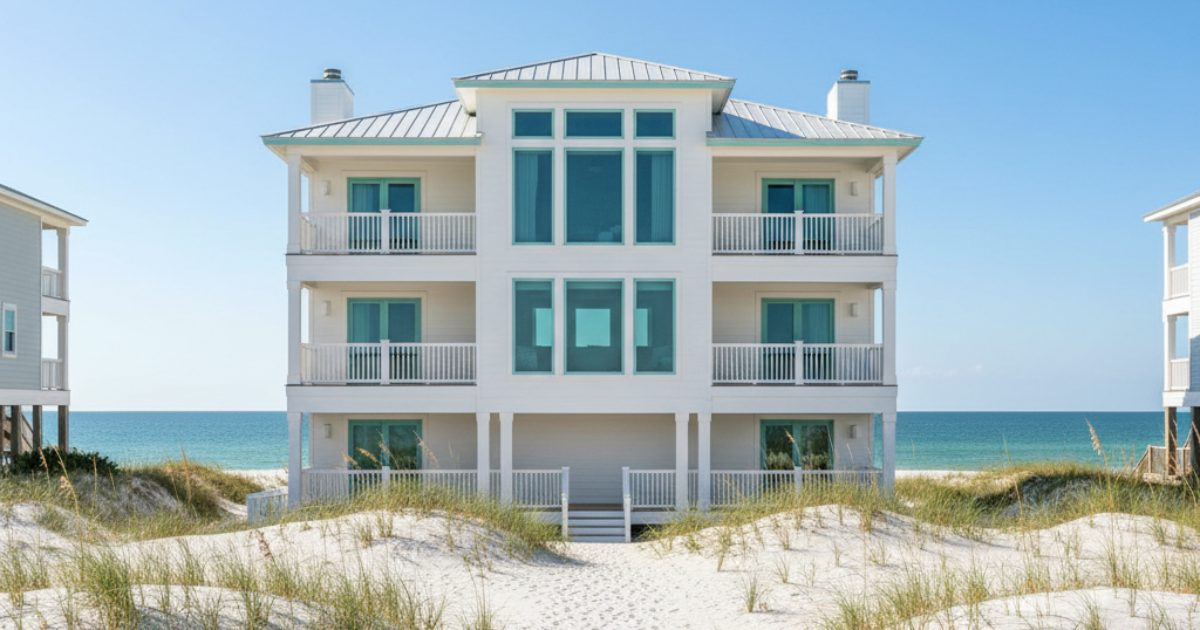
Gulf views or direct beach access. Properties with a water view command meaningfully higher daily rates and book faster during peak season.
Private outdoor space. A private pool, hot tub, or large balcony with Gulf views extends the desirable stay and justifies premium pricing.
Sufficient sleeping capacity. Properties that sleep eight or more guests consistently outperform smaller units in revenue per available night.
Professional photography and listing management. Listings with high-quality photos and dynamic pricing tools outperform self-managed listings with static rates.
Pet-friendly policy. Allowing pets, with appropriate deposits, opens a large segment of the traveling market that many owners exclude unnecessarily.
Professional property management typically costs between 20 and 30 percent of gross rental revenue on the Gulf Coast. For out-of-area owners, this is rarely optional; a vacant property with a maintenance issue left unaddressed for two weeks can cost far more than a year’s worth of management fees.
How 2026 Market Conditions Affect the Investment Case
The broader Pensacola real estate market has shifted meaningfully since the frenzied seller’s conditions of 2021 and 2022. Inventory has expanded, and buyers hold more negotiating leverage than they have in years. For investors, this creates a more favorable acquisition environment.
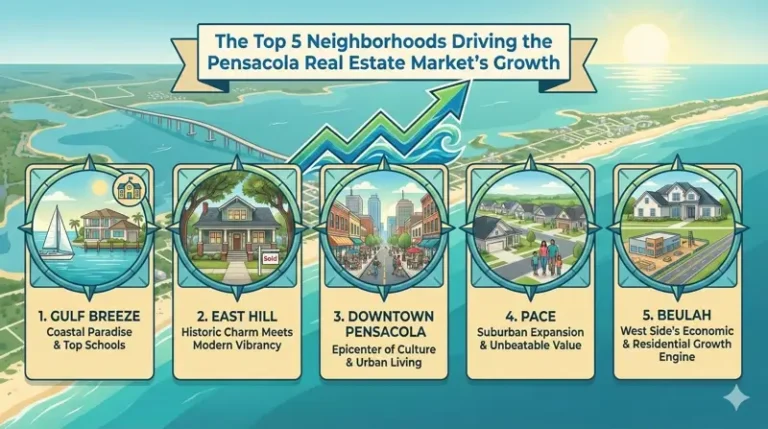
You can read a detailed breakdown of which neighborhoods are seeing the most activity in my post on the top neighborhoods driving the Pensacola real estate market’s growth. Understanding where demand is concentrating helps investors focus their search on areas with the strongest rental fundamentals rather than simply buying the first beachfront listing they find.
For buyers who have been watching from the sidelines, the current conditions represent a meaningful window. My post on why 2026 is a strong time to buy Pensacola real estate covers the financing and market dynamics in more detail. The combination of expanded inventory, moderating prices, and sustained tourism demand creates a reasonable case for well-underwritten vacation rental acquisitions this year.
Florida’s tourism sector remains a structural tailwind. The state recorded 31.7 million visitors in the first quarter of 2024 alone, and the Gulf Coast consistently draws a disproportionate share of repeat visitors who return year after year. That loyalty is an asset for rental owners who build strong reviews and a direct booking base over time.
Risks Worth Taking Seriously
A balanced investment analysis requires naming the risks directly, not burying them in fine print.
Hurricane and storm risk. A direct hit can mean weeks or months of lost revenue, plus deductible costs that can run into tens of thousands of dollars even with full coverage.
Regulatory shifts. Florida’s short-term rental preemption law has been modified before and could be modified again. A change that allows more local restrictions could affect your ability to rent the property.
Insurance market instability. Several major carriers have reduced their Florida exposure. Replacement coverage may be more expensive or harder to obtain at renewal.
Seasonal cash flow gaps. A 59 percent annual occupancy rate means roughly 40 percent of nights are unbooked. Carrying costs do not pause during those months.
Leasehold financing constraints. Fewer lenders work with Pensacola Beach leaseholds, which can limit your exit options if you decide to sell.
None of these risks disqualifies the investment. They do require that you enter with adequate cash reserves, appropriate insurance, and a conservative revenue model that does not assume peak-season rates year-round.
Putting It All Together: Is This the Right Investment for You?
Pensacola Beach vacation rentals offer a credible path to cash flow and long-term appreciation for investors who do the homework. The market data supports demand; the regulatory framework is manageable with proper due diligence; and the 2026 buyer’s market conditions give you more room to negotiate than there was two or three years ago.
The investors who struggle in this market are typically the ones who underestimate insurance costs, overestimate occupancy during shoulder season, or purchase without understanding the leasehold structure. The ones who succeed treat it like the business it is: with a real budget, a professional management plan, and a five-year horizon rather than a get-rich-quick timeline.
For ongoing market updates and analysis specific to the Gulf Coast, visit my Pensacola real estate news and insights page. I publish regular market commentary there to help buyers and investors stay informed as conditions evolve.
I have been helping buyers, sellers, and investors in the Pensacola area since 2023, and my specialization in Resort and Second/Vacation Properties means I understand the specific considerations that come with coastal investment purchases. If you are weighing a Pensacola Beach vacation rental acquisition and want a straightforward conversation about what the numbers look like for a specific property, reach out to me at karen@karenschwan.com or call +1-760-473-7172. I am glad to help you think it through.
Frequently Asked Questions
What is the average performance of short-term rentals in Pensacola Beach?
As of March 2024, Pensacola short-term rentals showed an average daily rate of $295.10 and an average occupancy rate of 59 percent, leading to an average monthly revenue of $5,200. Beachfront and beach-access units typically perform even better, especially during the peak season from May to September.
What are the key insurance requirements for a Pensacola Beach vacation rental?
You should budget for at least three separate insurance policies: a dwelling policy for the structure, a flood policy, and a vacation rental liability policy. Wind coverage may be included or require a separate endorsement. Annual costs can range from $8,000 to over $20,000, so obtaining actual quotes before making an offer is crucial.
How does the leasehold ownership structure on Pensacola Beach affect buyers?
Properties on Pensacola Beach are typically held as leasehold interests, not fee-simple ownership, which adds complexity. This distinction impacts financing options, insurance underwriting, and resale value, so it's vital to work with lenders and title attorneys experienced with Gulf Islands leaseholds.
What are the main risks to consider with a Pensacola Beach vacation rental investment?
Key risks include hurricane and storm damage leading to lost revenue and high deductible costs, potential shifts in short-term rental regulations, instability in the insurance market, seasonal cash flow gaps during unbooked periods, and constraints with financing leasehold properties.
What features drive strong performance for vacation rentals in this market?
Top-performing rentals typically offer gulf views or direct beach access, private outdoor space like a pool or hot tub, sufficient sleeping capacity for eight or more guests, professional photography and listing management, and a pet-friendly policy. These features help justify premium pricing and attract more bookings.